Tarot card meaning · Major Arcana Three
Three of Swords
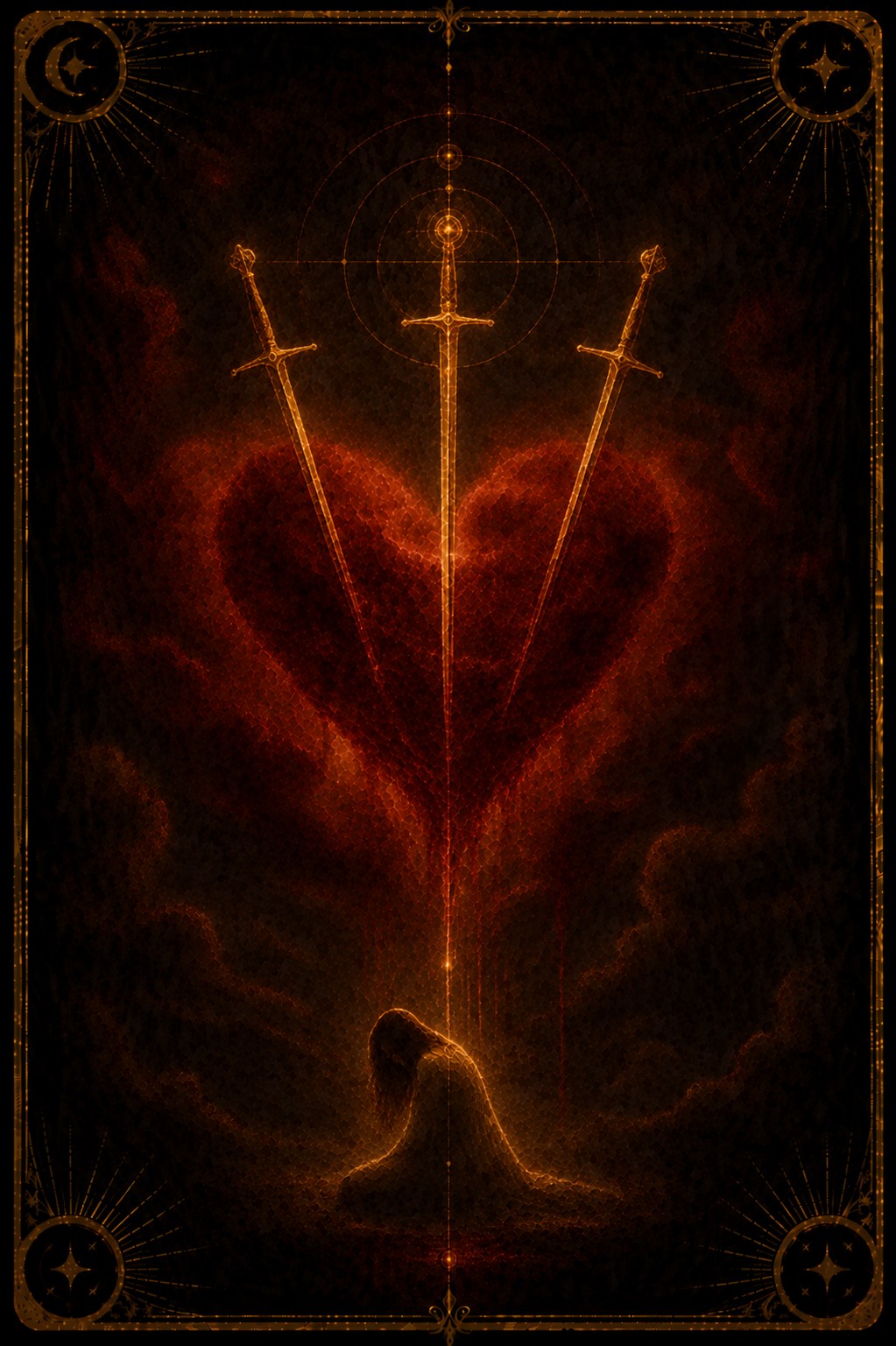
The truth arrived, and it hurt; the hurt is not the enemy — the pretending was.
Also known as : The Pierced Heart · The Broken Cup · Three of Blades · The Heartbreak Card
EnglishEspañolFrançais (en)
Upright and reversed, at a glance
Upright
- ✦A truth that wounds and clarifies at once
- ✦Grief that must be felt rather than managed
- ✦Separation, betrayal, or words that cannot be unsaid
- ✦The relief hidden inside an honest ending
Reversed
- ✦Holding the blade in place long after the cut
- ✦Rehearsing the injury instead of tending it
- ✦Refusing to grieve in order to stay functional
- ✦Healing that has quietly begun before you noticed
Curious how it reads for you? Try a draw with Madam Moira →
Classical tarot meaning: the Three of Swords
The Three of Swords shows a heart pierced by three blades beneath a raining sky. It is one of the plainest images in the deck, and one of the least cruel: nothing is hidden, nothing is symbolic enough to argue with. Something true has gone through you.
In the suit of Swords — mind, speech, truth — three is where thought meets feeling. The wound here is almost always made of words: what was said, what was finally admitted, what you already knew and had agreed not to know.
The card in Madam Moira's deck
Madam Moira paints this as The Pierced Heart: three blades of gold light standing upright through a heart of deep red, and beneath them a figure kneeling, small, still lit. She keeps the light on the figure deliberately. The heart is pierced; the person is not gone.
The blades in her painting are not falling. They are already still. That is the mercy of this card — the worst of it has happened, and what remains is aftermath, which is survivable.
Upright: what it asks of you
Upright, the card asks you to let the pain be information rather than punishment. Grief that is felt moves; grief that is argued with stays. It does not ask forgiveness, speed, or a lesson learned by Friday.
It also asks a harder thing: to check whether the truth that wounded you was one you had already sensed. Very often this card marks not the arrival of bad news but the end of a long private denial.
Reversed: where the wound goes wrong
Reversed, the Three of Swords is either the wound kept open — retold, re-read, checked nightly — or the wound denied, sealed over while still full. Both leave the blades in.
In its kinder reversal, this card marks a healing already underway: a day that passed without the thought, a name that no longer changes the temperature of the room.
Three of Swords in love, work, and the everyday
In love, it is the conversation after which nothing returns to its old shape — a betrayal, a confession, or an honest no. It is not always the end of the relationship; it is always the end of a version of it.
In work, it is criticism that lands because it is accurate. Day to day, it is the ordinary heartbreak of seeing someone clearly and loving them anyway, or seeing them clearly and knowing you cannot.
What this card asks
- ✦“What did this pain tell you that you already suspected?”
- ✦“Are you tending the wound, or keeping it?”
- ✦“What would it cost you to stop explaining it to yourself?”
Draw a card with Madam Moira and see how Three of Swords reads against your own question, or read the guide to the reading first.