Tarot card meaning · Major Arcana IV
The Iron Chair
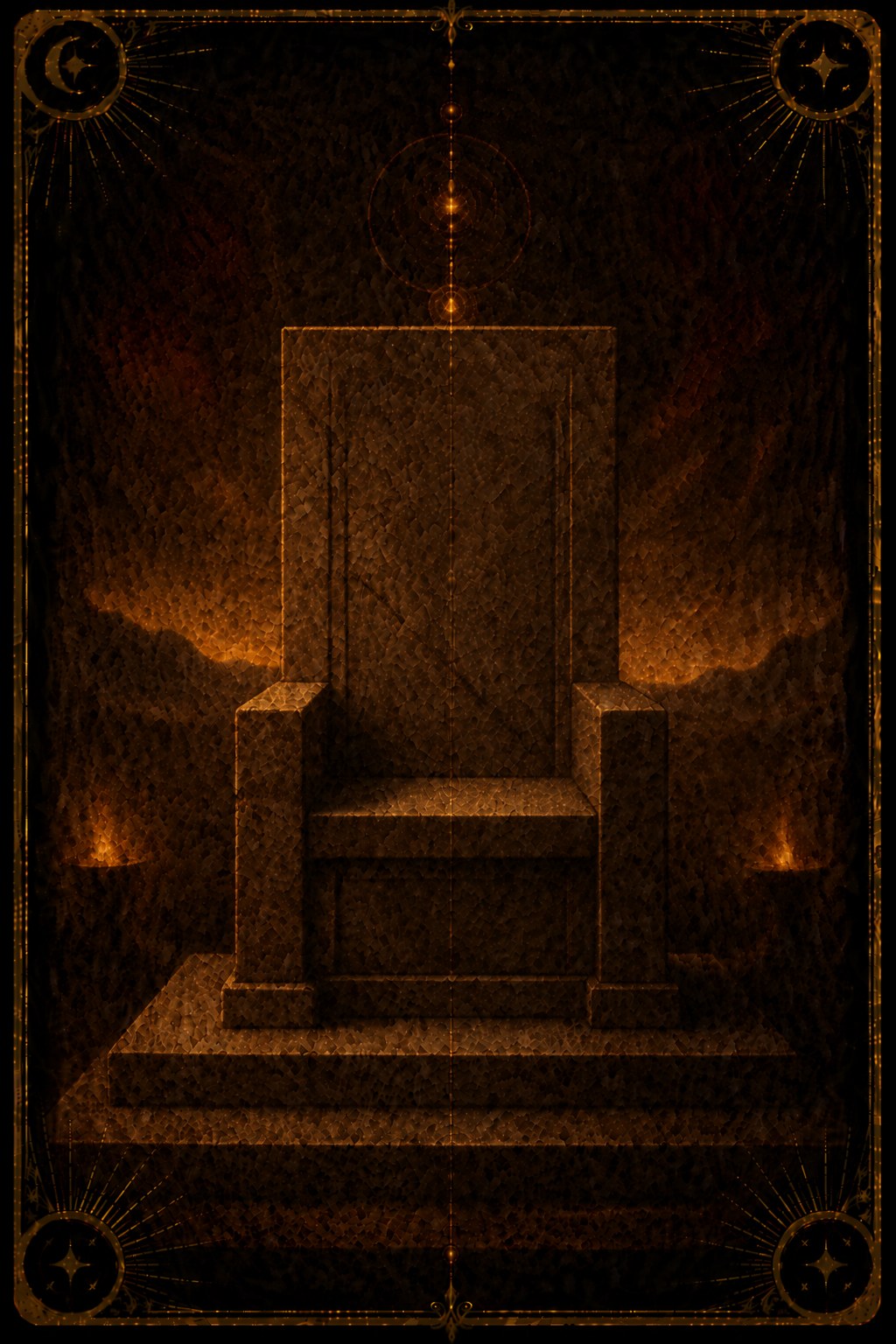
Order that holds whether or not you sit in it — and a seat that waits to be claimed.
Also known as : The Emperor (Major Arcana IV) · The Seat · The Throne · L'Empereur (Tarot de Marseille) · The Structure
Upright and reversed, at a glance
Upright
- ✦Authority taken up rather than complained about
- ✦Structure that makes freedom possible
- ✦Boundaries stated plainly, once
- ✦Responsibility that fits you
Reversed
- ✦Rigidity mistaken for strength
- ✦Control borrowed from someone who never earned it
- ✦Refusing a seat that is rightfully yours
- ✦Rules kept long after their reason died
Curious how it reads for you? Try a draw with Madam Moira →
Classical tarot meaning: The Emperor
The fourth card of the Major Arcana is the Emperor: stone throne, rams' heads, a straight spine. He is the counterweight to the Empress's fertility — form instead of flow, the law that lets a field be farmed rather than merely admired.
Four is the number of the square, the table, the settled thing. Read traditionally, the card speaks of authority, discipline, fatherhood and the structures we consent to.
The card in Madam Moira's deck
In Madam Moira's deck it is painted as The Iron Chair: a plain, unornamented seat, straight-backed, entirely empty. No ruler, no crowd. The order exists before anyone occupies it.
That emptiness is the whole reading. The question is never whether authority exists in your situation — it is who is sitting in it, and whether you have quietly handed the seat to someone else.
Upright: what it asks of you
Upright, the card asks you to take the chair. Name the rule, set the hour, hold the line you have been hinting at for months. It favours plain structure — a schedule, a budget, a stated limit — as an act of care rather than coldness.
It also blesses the unglamorous work of maintenance: the things that only hold because somebody keeps holding them.
Reversed: where the order goes wrong
Turned inward, the iron becomes brittle. Rules survive their purpose, control replaces trust, and 'this is how it is done' answers a question nobody asked. There is also the opposite failure: abdication — leaving the seat empty and calling the resulting chaos other people's fault.
Both are corrected the same way: choose which few structures you actually want to enforce, and let the rest go.
The Iron Chair in love, work, and the everyday
In love, it often speaks of who decides, and whether that arrangement was ever agreed out loud. In work, it is the card of ownership: the project that needs one person to say what happens next.
Day to day, it asks for one boundary spoken without apology.
What this card asks
- ✦“Who is sitting in the chair that belongs to you?”
- ✦“Which of your rules still serves its original reason?”
- ✦“Where would a plain structure end an argument you keep having?”
Draw a card with Madam Moira and see how The Iron Chair reads against your own question, or read the guide to the reading first.