Tarot card meaning · Major Arcana X
Wheel of Fortune
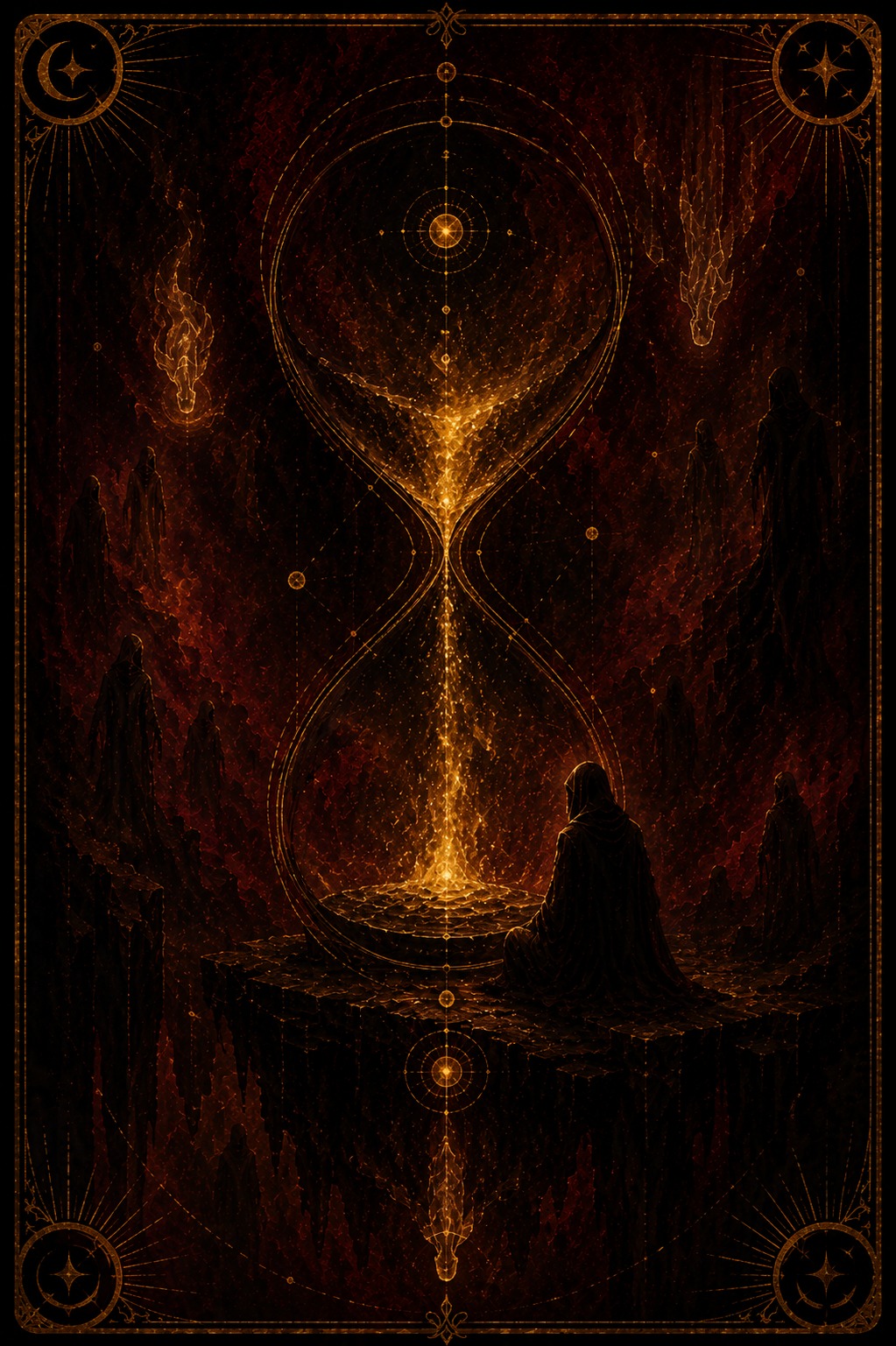
Time itself — what will not be hurried, and what has less of it than you thought.
Also known as: The Hourglass · La Roue de Fortune (Tarot de Marseille) · The Turning · The Wheel · The Sands
EnglishEspañol
Upright and reversed, at a glance
Upright
- ✦A turning point arriving on its own schedule
- ✦Luck that rewards whoever was already prepared
- ✦A cycle you recognise from the inside this time
- ✦Release of the outcome without release of the effort
Reversed
- ✦Waiting for the wheel instead of moving your hands
- ✦The same season lived again and called bad fortune
- ✦Clinging to a high point past its turn
- ✦Reading every delay as a verdict about you
Curious how it reads for you? Try a draw with Madam Moira →
Classical tarot meaning: Wheel of Fortune
The Wheel of Fortune is the tenth card of the Major Arcana. Medieval imagery shows figures bound to a turning wheel — one rising, one crowned at the top, one falling — under the hand of fortune. It is the deck's plainest statement that circumstance moves whether or not you are ready.
Ten completes the first cycle of the Major Arcana and returns to one. Nothing here is final: the crown at the top of the wheel is a position, not a possession.
The card in Madam Moira's deck
In Madam Moira's painted deck this card is called The Hourglass. A vast glass of gold sand pours through its narrow waist in the centre of a red-dark cavern, and a single seated figure watches from the ledge beside it — close enough to touch the glass, making no attempt to.
Where the classical wheel emphasises chance, this painting emphasises rate. The sand is not cruel. It simply does not negotiate, and the figure's stillness is the card's actual counsel.
Upright: what it asks of you
Upright, the Wheel says the season is changing and you are not its author. Something is loosening, arriving or leaving on a timetable that predates your plans. The card asks you to act well inside a situation you do not control — to prepare, so that when the turn comes it finds you standing.
It also asks you to look for the repetition. Most turning points are recognisable: the same shape of situation, returning in a new key. Recognition is what turns a cycle into a lesson.
Reversed: where the turning goes wrong
Reversed, the Wheel is passivity dressed as patience — waiting for luck to change while doing nothing that would meet it. It also describes gripping: holding a good season past its natural end and mistaking the ending for injustice.
There is a harsher reversal, and it is about self-narrative. When every delay is read as proof of your own unworthiness, the wheel stops being weather and becomes a court.
Wheel of Fortune in love, work, and the everyday
In love, this card marks the phase change — the ease that arrives after a difficult year, or the drifting apart that neither person chose. It asks whether you are relating to the person or to the season you are having with them.
In work, it is timing: the market, the vacancy, the offer that comes eighteen months early or late. Day to day, it asks for the two things that actually respond to you — your preparation, and your grip.
What this card asks
- ✦“What are you waiting for that has already begun?”
- ✦“Which season are you gripping past its turn?”
- ✦“If the timing is not yours to set, what is?”
Draw a card with Madam Moira and see how Wheel of Fortune reads against your own question, or read the guide to the reading first.